Both wood and aluminum can make excellent portable mini golf courses. The better choice depends on what you want to spend, how often you expect to use the equipment, and how you will transport and store it.
A side-by-side comparison
| What matters | Wood frames | Aluminum frames |
|---|---|---|
| Initial investment | Typically lower cost to purchase | Typically higher cost initially |
| Typical audience | New rental businesses, schools, events and budget-sensitive buyers | Frequent-use operators and buyers focusing on frame durability |
| Maintenance | Inspect painted/sealed surfaces and dry thoroughly | Generally less routine frame refinishing; continue inspecting turf, fasteners and finishes |
| Outdoor weather | Temporary outdoor use with prompt drying; covered storage essential | More weather-resistant frame, but not maintenance-free or intended for neglect |
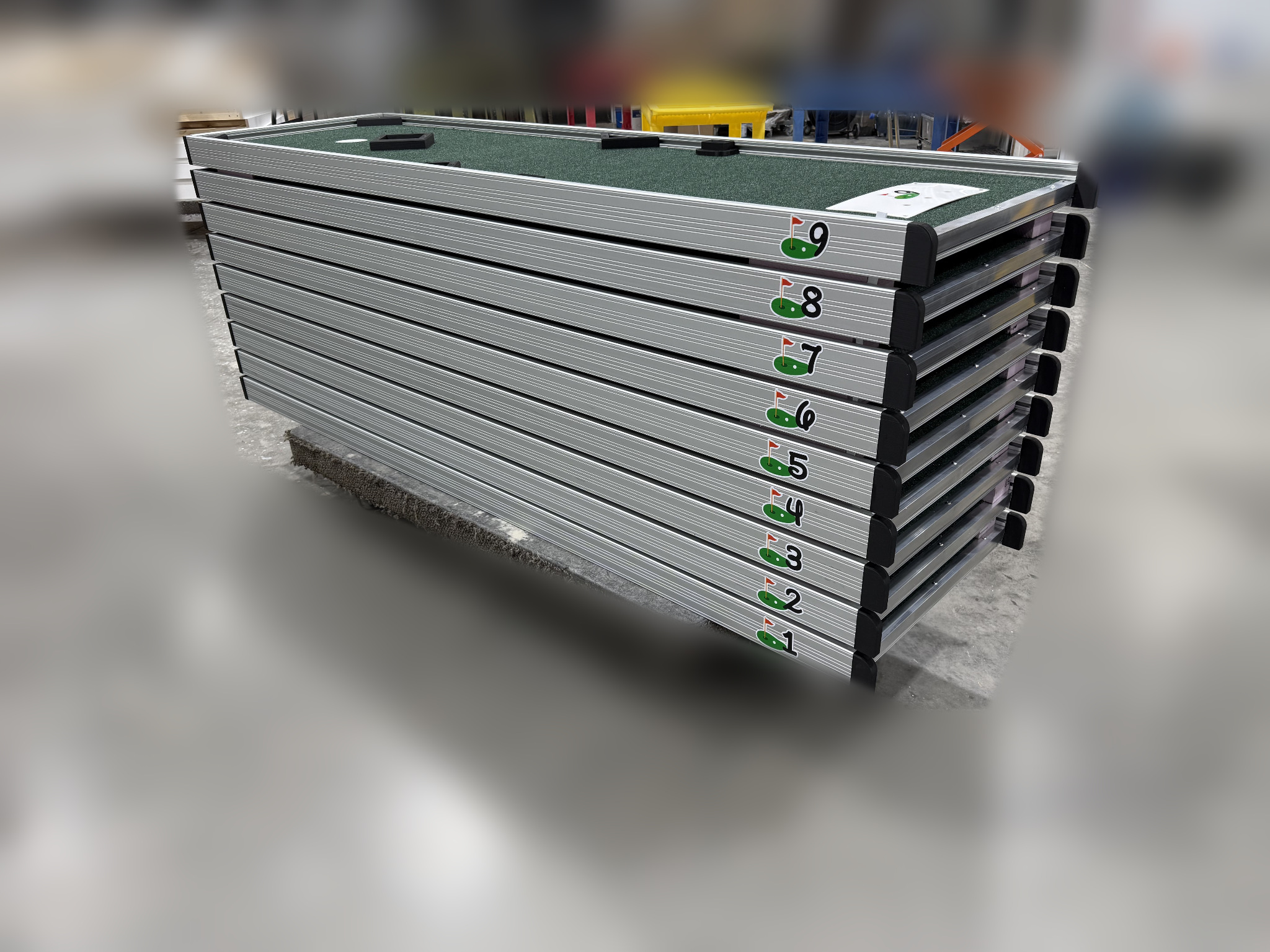
| Transportation | Plan careful packing and protection of corners and finishes | Nested or stacked sections may make loading organized; confirm model details |
| Design choice | Basic / Slim Stack / Premium | Standard / Classic / Elite |
When wood makes sense
Wood can be an excellent way to test a rental market without committing as much money upfront. It also gives schools, fundraisers and businesses a full-sized entertainment experience at a more accessible price point. For a company expanding into mini golf for the first time, cash remaining after equipment purchase may be just as important as frame material.
The trade-off is preventive care. Avoid storing damp sections together, inspect high-use edges and keep the course covered between rentals. The website and store describe the wood surface treatment, but no treatment makes a wooden course suitable for permanent uncovered outdoor use.
When aluminum makes sense
Aluminum deserves a close look when courses will be assembled and moved frequently. Higher initial spending can sometimes be justified by the lower risk of frame-related moisture damage and a smaller routine frame-maintenance workload. Buyers should still budget for cleaning, turf upkeep, inspections and eventual replacement of wear items.
Also consider whether you will transport the sets yourself or use a trailer, storage racks or a cart. Compare actual stacking and handling requirements before assuming one material will be easier for your crew.
How to compare total cost of ownership
Think beyond the invoice. For each option, estimate purchase cost, shipping, transport supplies, routine maintenance materials, storage expense, staff loading time and probable frequency of use. If you will run events every weekend, your priorities may differ from an organization hosting just a few events a year.
Recommendation: Start with how you will use the course, not a blanket claim that one material is universally better. View the actual course plans and choose the family that meets your footprint and budget.
Ready to compare actual equipment?
Use our original layout drawings to see how the models differ, then visit CarnivalMFG.com for live pricing and purchase options.